Moving up to the mountains of Wang Naam Khio, in Nakhon Ratchasima province, we reached the cool air and green hills of นิคมเศรษฐกิจพอเพียง (settlement for self sufficient economy) .

Like นิคมปลูกหน่อไม้ฝรั่งอินทรีย์ in Wang Sombun, นิคมเศรษฐกิจพอเพียง is a 'start up' community which began from a survey by the municipal government to identify impoverished families without land for livelyhood. The municipality contacted สปก (so-pa-kaw), an organisation which supports agricultural development, to set up a project for the people. In 2545 (2002) สปก purchased land for the project (around 4000 sqm per family) and began to train the members. The project was set up to grow gradually, with members joining in groups of 50 each year (so far 3 generations have joined). In 2548 (2005) a delegation from the new community approached CODI and was invited to join the Baan Man Kong Chonabot project.
 พี่อำไพ, from the first generation to join the community and head of the commitee which approached CODI, explained to us the history of the settlement and the many works which the community is currently undertaking.
The community have set up 3 livelyhood study groups, one experimenting with growing vegetables, one focusing on raising animals, and one attempting to develop tourism. Particularly interesting is the tourism group's plan to tap into the growing trend of health tourism: 'Come to Wang Naam Khio, ride bicycles in the cool mountain air and eat fresh vegetables, its good for you!'.
 The vegetable group has been trialing various crops as well as systems of irrigation and composting.
 พี่อัคคี (centre page), from the second generation and head of the tourism study group runs a group of guest houses for those looking for healthier holidays.
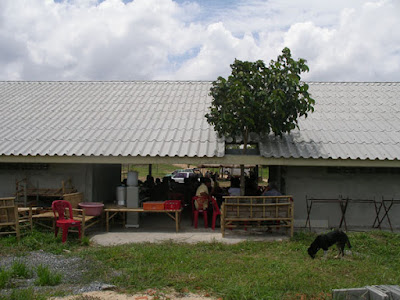 The tourism group also runs a kind of open air conference centre. CODI held a conference here for the members of Baan Man Kong Chonabot to exchange ideas and experiences.
The community have also started various other support projects, including a community shop, a micro finance group and a small workshop producing bricks for use in building houses. The brick making technology was developed by Kasetsart University.
 The brick making workshop
Some problems have occured with the 'generation' system of adding members in groups each year, members from different generations have tended to stick together and not trust one another. There have been complaints from later generations of nepotism and a lack of transparency from the initial generation.
 There is conflict within the community between different generations of settlers.
The community are now looking to move on from livelyhood projects and begin building houses and moving in permanently.
 Some families have already established themselves permanently on the land.


